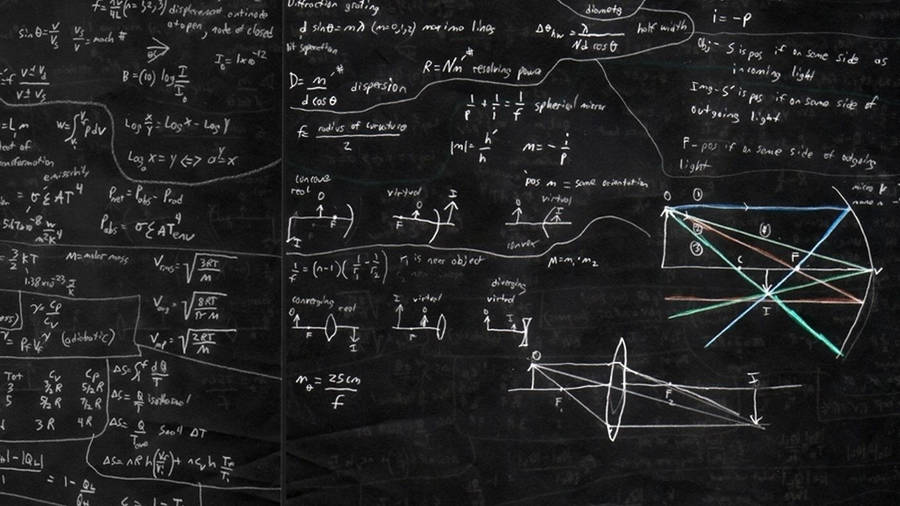

Mathematics, the enchanting dance of numbers and patterns, is a captivating realm where logic aligns with imagination. As we embark on a journey through this spellbinding symphony, we discover a world that transcends beyond mere calculations, revealing an undeniable magic pulsating through its every fiber.
In its essence, mathematics is the language through which we decipher the intricate tapestry of the universe. From the breathtaking wonders of nature to the precise engineering marvels that shape our modern world, mathematics lays the foundation for understanding and unraveling these complex phenomena. It possesses the power to illuminate the hidden patterns and captivating harmonies that govern our reality, allowing mankind to play an active role in this extraordinary symphony of existence.
Indeed, the allure of mathematics lies not only in its practical applications but also in its ability to stimulate our minds and invigorate our curiosity. With every problem we solve and every theorem we prove, we indulge in a process of deep thinking and intellectual exploration. It challenges our creativity, honing our analytical skills as we strive to unlock the secrets of the numerical universe.
Join me as we delve into the captivating realm of mathematics, where numbers live and breathe, beckoning us to unveil their enigmatic melodies. Prepare to be amazed as we uncover the awe-inspiring wonders hidden within the seemingly mundane digits and equations. Together, let us embrace the beauty and magic of mathematics, a language that speaks to the very core of our existence.
1. The Beauty of Patterns
Mathematics, the language of numbers and logic, holds within it a mesmerizing quality that captivates both the logical and creative minds. One of the most enchanting aspects of this subject is its profound ability to uncover patterns in the world around us. Whether it be in the graceful spiral of a seashell or the rhythmic beats of music, mathematics reveals the hidden symphony of patterns that exist in our everyday lives.
Patterns can be found everywhere, from the infinitely complex to the elegantly simple. They manifest in the natural world, as seen in the intricate arrangements of petals on a flower or the formations of crystals. These patterns not only provide us with a sense of aesthetic pleasure, but also serve as a fundamental basis for our understanding of the universe. Mathematics allows us to recognize, analyze, and describe these patterns, unraveling the secrets of nature's design.
Moreover, patterns in mathematics extend far beyond the realms of nature. They permeate through the abstract landscapes of numbers and shapes, creating a mesmerizing tapestry of intricacy. The Fibonacci sequence, for example, is a pattern that appears in countless aspects of life – from the branching patterns of trees to the spirals of galaxies. Such patterns evoke a sense of wonder and awe, showcasing the interplay between mathematics and the world we inhabit.
In this symphony of numbers, mathematics unravels the mysteries of patterns, connecting the dots and revealing the underlying harmony that binds our world together. It is through the study of mathematics that we come to appreciate the sheer beauty of patterns – a beauty that stirs our curiosity and inspires us to delve deeper into the magical realm of numbers.
2. The Power of Logic
Logic, a fundamental aspect of mathematics, serves as the sturdy backbone that supports the intricate structure of this captivating discipline. Through logical reasoning, mathematicians are able to unravel the mysteries hidden within numbers, shapes, and patterns. By carefully constructing arguments based on undeniable truths and indisputable principles, mathematics stands as an unshakeable fortress of knowledge.
Within the realm of mathematics, logic enables us to prove theorems and establish rigorous foundations. It provides us with the tools to ascertain the validity of mathematical statements, ensuring that every step taken is logically sound. This meticulous approach guarantees that the conclusions drawn are not mere assumptions, but rather concrete facts grounded in reason and deduction.
The power of logic extends beyond mathematics itself, permeating various other fields and areas of human endeavor. From computer science to philosophy, from engineering to physics, logic acts as a guiding principle that unifies different disciplines and facilitates problem-solving. By harnessing the power of logical reasoning, we are able to unlock new insights, discover innovative solutions, and explore the boundless potential of the universe.
Logic, therefore, embodies the essence of mathematics, igniting the spark of curiosity within us as we delve deeper into its enigmatic world. It empowers us with the ability to unlock the hidden connections between seemingly unrelated concepts, unraveling the intricacies of nature and the underlying order of the cosmos. The power of logic is the key that opens the door to the captivating symphony of numbers, allowing us to immerse ourselves in the magic of mathematics.
3. The Application of Mathematics
In the world of mathematics, the intrinsic beauty of numbers is not confined to abstract concepts and theories. Instead, mathematics finds applications in various fields, bringing about practical solutions to real-world problems.
One area where mathematics finds abundant use is in the realm of physics. The laws of physics are often expressed through mathematical equations, allowing scientists to model and predict the behavior of physical systems. From understanding celestial movements to simulating fluid dynamics, mathematics forms a fundamental tool for unraveling the mysteries of the physical universe.
Mathematics also plays a crucial role in the advancement of technology. Engineers rely on mathematical principles to design, develop, and optimize complex systems. From electrical circuits to aircraft structures, mathematics provides the foundation for creating efficient and reliable technological solutions that shape our modern world.
Additionally, mathematics finds its way into the field of economics and finance. Mathematical models are used to analyze market trends, predict future outcomes, and evaluate investment strategies. By applying mathematical techniques, economists and financial analysts are able to make informed decisions and mitigate risks, aiding in the growth and stability of economies.
In conclusion, the application of mathematics extends far beyond its theoretical roots. Its practical impact can be seen in various domains, from the laws of physics and the development of technology to the realms of economics and finance. By unlocking the power of numbers and embracing the spellbinding symphony of mathematics, we can continue to harness its magic and create a better understanding of the world around us.